Home › Pests & diseases › Armyworms
Armyworms: signs and treatment in Jamaica
Voracious caterpillars that travel in large groups (armies), consuming massive amounts of foliage. PlantArmor's crop guides list armyworms as a common problem on leafy veg (callaloo/pak choi).
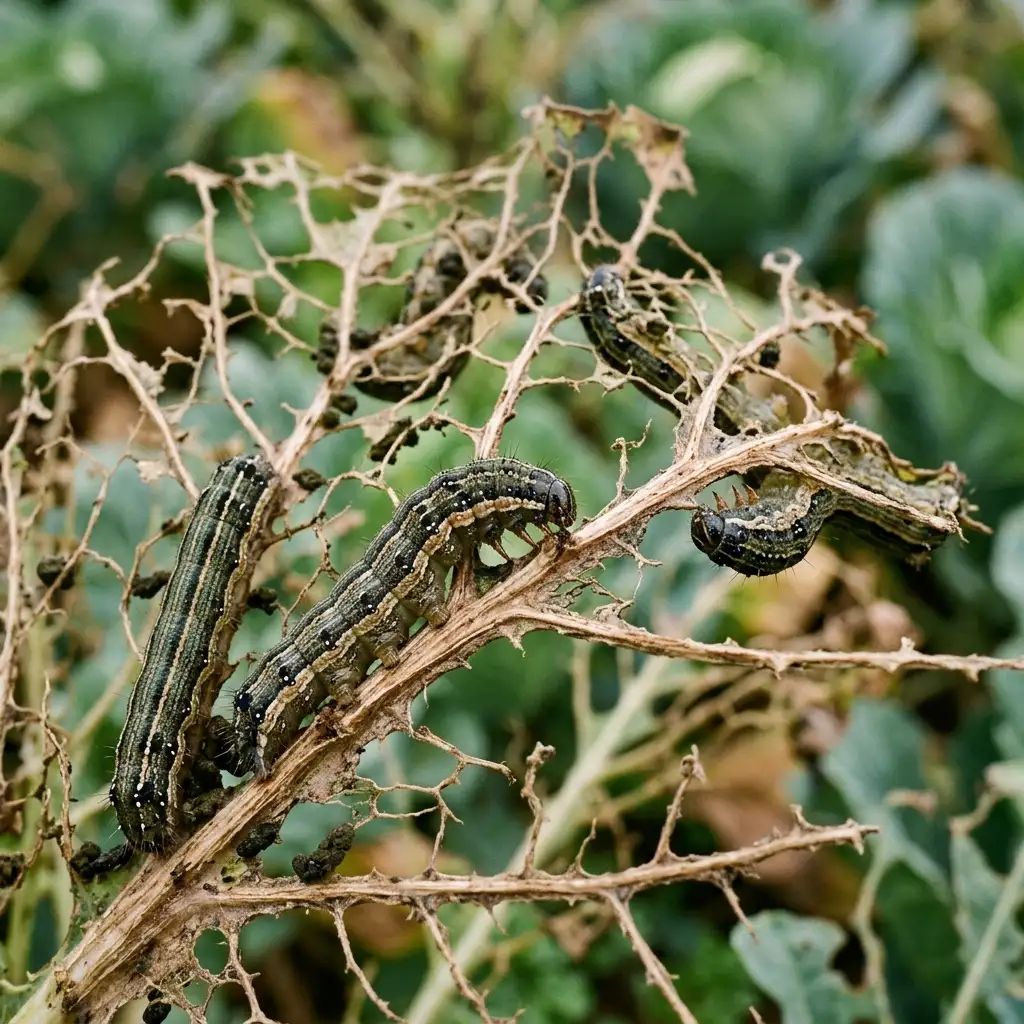
Signs to look for
- Skeletonized or completely eaten leaves
- Large amounts of frass on the ground or in leaf whorls
- Large caterpillars feeding primarily at night
What to do
Crops it affects
Questions growers ask
How do I recognise armyworms?
Voracious caterpillars that travel in large groups (armies), consuming massive amounts of foliage. The signs to look for: Skeletonized or completely eaten leaves. Large amounts of frass on the ground or in leaf whorls. Large caterpillars feeding primarily at night.
What should I do about armyworms?
Apply Bt (Bacillus thuringiensis) or Spinosad. Spray late in the afternoon or evening when they are active. Always read the product label and observe the registered rate, re-entry period and pre-harvest interval before you apply any pesticide.
Which crops are affected by armyworms in Jamaica?
PlantArmor's crop guides list armyworms as a common problem on leafy veg (callaloo/pak choi).
Check it in the field
PlantArmor's reference library works offline, so you can compare what you are seeing against it standing in the plot, then log the spray you use along with its re-entry and pre-harvest intervals. Free to use.
This description and treatment come from the same reference library the PlantArmor app uses in the field. Pesticide registrations and permitted uses change — always read the current product label and observe the stated rate, re-entry period and pre-harvest interval.