 PlantArmor
Home › Pests & diseases › Aphids
Aphids: signs and treatment in Jamaica
Sap-sucking insects that multiply rapidly, causing stunting and vectoring deadly viruses. PlantArmor's crop guides list aphids as a common problem on scotch bonnet pepper, cucumber and watermelon.
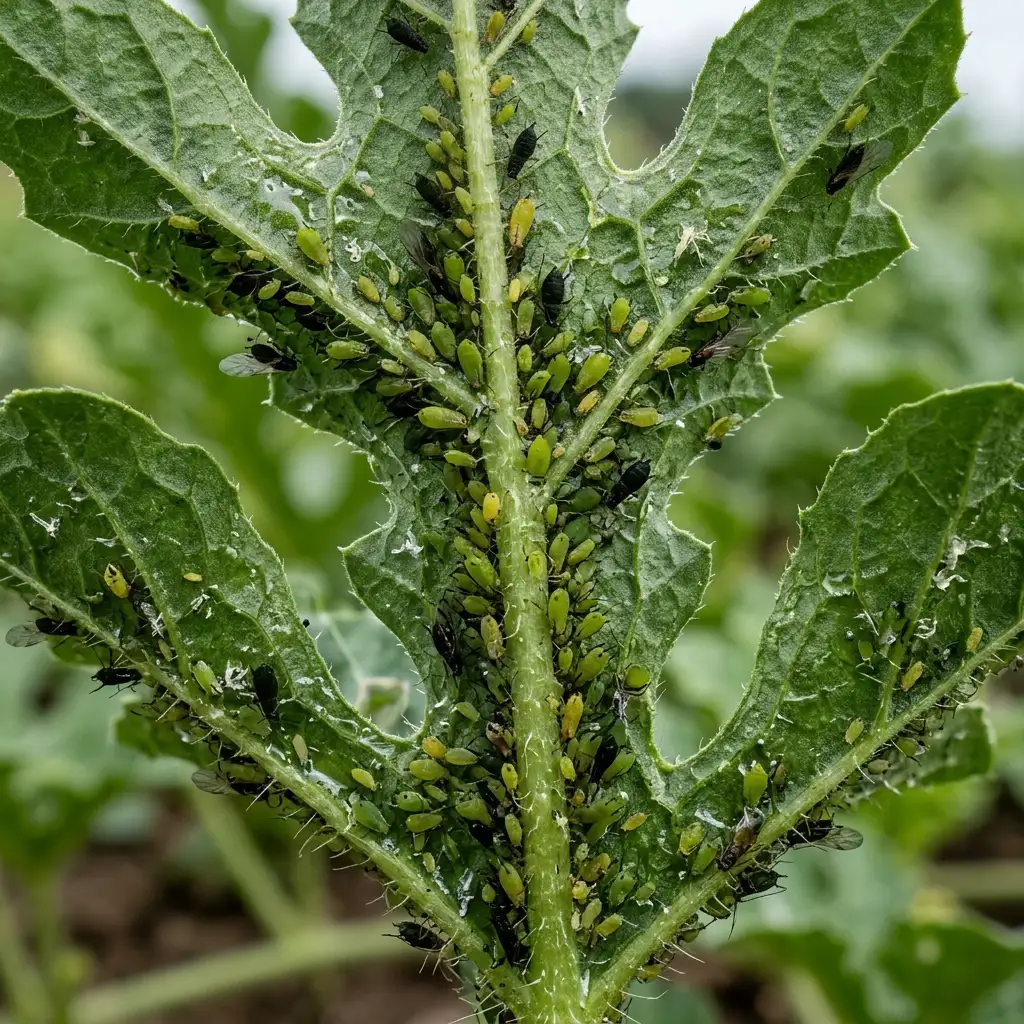
Signs to look for
- Curled, yellowing leaves
- Sticky honeydew residue on lower leaves
- Sooty mold growing on the honeydew
What to do
Crops it affects
Questions growers ask
How do I recognise aphids?
Sap-sucking insects that multiply rapidly, causing stunting and vectoring deadly viruses. The signs to look for: Curled, yellowing leaves. Sticky honeydew residue on lower leaves. Sooty mold growing on the honeydew.
What should I do about aphids?
Apply Neem Oil for light infestations or, for severe ones, a product whose label lists aphids, such as Caprid 20 SL, Actara or Pegasus. Encourage ladybugs. Always read the product label and observe the registered rate, re-entry period and pre-harvest interval before you apply any pesticide.
Which crops are affected by aphids in Jamaica?
PlantArmor's crop guides list aphids as a common problem on scotch bonnet pepper, cucumber and watermelon.
Check it in the field
The PlantArmor app works with no signal, so you can compare what you are seeing against its reference library standing in the plot, then log the spray you use along with its re-entry and pre-harvest intervals. Free to use.
This description and treatment come from the same reference library the PlantArmor app uses in the field. Pesticide registrations and permitted uses change — always read the current product label and observe the stated rate, re-entry period and pre-harvest interval.